Day twenty-three: the municipality responds — and the circle around her grows
The municipality of Gouda confirms in writing that it will not provide the family with any documents, and states that the detention order was sent by registered post to Trudy's home address — the house from which she was taken on 6 July. Meanwhile the statements of 27 July are being signed, and a former neighbour has written to the mayor.
This is a factual account of 28 July 2026, twenty-three days after the involuntary admission. These are facts, not opinions. Readers can form their own judgement.
The municipality’s answer
On 27 July, the family received a response from the central legal department of the municipality of Gouda, replying to the follow-up questions submitted on 20 July. In this mail, which has been added to the case file in full:
- the municipality repeats that, based on the duty of confidentiality in Article 18c(4) of the Dutch Care and Compulsion Act (Wzd), it will not provide the family with any information or documents from a file, and that the questions concerned will not be answered;
- the municipality states that a copy of the emergency detention order is sent by registered post to the home address of the person concerned, and that this fulfils the obligation to send the order to that person;
- the municipality states that no objection or appeal can be lodged against an emergency detention order, and points to the possibility of a complaint with a complaints committee and to the client confidential adviser;
- the municipality indicates that any new or repeated requests may simply be answered by reference to this mail or to its mail of 20 July.
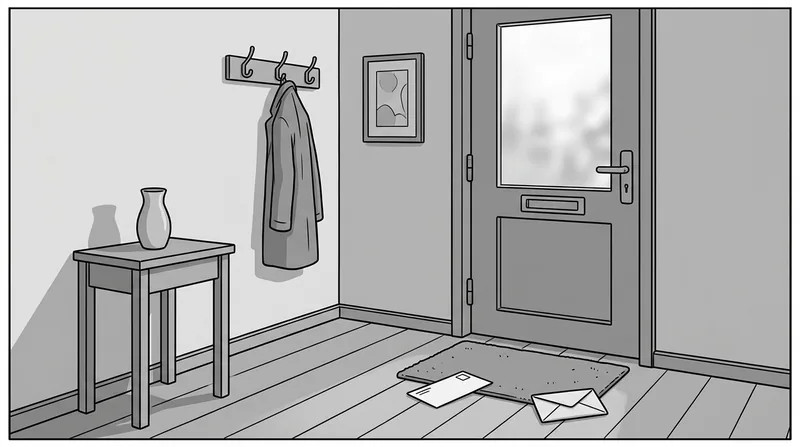
For factual context on the second point, as previously recorded on this site: Trudy has not been at her home address since 6 July 2026 — she was taken from that house that morning — and her post has been brought in by neighbours ever since. The family is having the accumulated post checked for registered items and collection notices.
Update, 28 July. Among the post held at the home address — kept since 6 July by those around her — was a collection notice for a registered item. That item could not be received at the home address: Trudy has been in the closed facility since 6 July 2026 and was not there to sign for it. The registered item was not delivered. This sequence of events has been documented with supporting evidence in the case file.
As always: this is an account of the municipality’s position. Its legal assessment is a matter for the qualified professionals and, ultimately, for the court.
No contact on day twenty-three
On 28 July, her son called the facility at around 9:00 PM, within the applicable contact arrangements. He was told that Trudy was already asleep and could not come to the phone. No contact with her was established that day. This call attempt, too, has been recorded in the case file.
The statements of 27 July are being signed
The two friends and regular caregivers who visited Trudy on 27 July have confirmed that they are putting their observations from that visit into signed written statements. Both have indicated that they are prepared to explain their statements in person if asked — including before a court, should that be needed to contribute to Trudy’s return home.
This grows the set of signed statements from people in her immediate circle: about her independent functioning up to 6 July 2026, and now also about her clarity, her condition and her unchanged wish as observed on 27 July — three weeks after the admission.
A request to the mayor of Gouda
A former neighbour of Trudy’s — he has known her for over fifteen years, lived near her until a few months ago and remains in regular contact with her — has informed the family that he has written to the mayor of Gouda. In his message he requests immediate reconsideration of the situation and Trudy’s return to her own home. He has announced that he will follow up on his request by telephone.
For context, and without drawing any conclusion about this case: under the Dutch Care and Compulsion Act, it is the mayor who issues an emergency detention order.
The circle is growing
Twenty-three days after 6 July, the circle around Trudy consists of family, friends, neighbours and regular caregivers — people who know her from the years in which she lived independently in her own home, and who are now, each on their own initiative and in their own way, speaking up and putting on record what they know. Her house remains cared for, unchanged, waiting for her.
The goal of Trudy’s family and community is unchanged: her return home. No names are mentioned in this account and no conclusions are drawn. This post will be updated as more becomes known.